
How have auto manufacturers achieved their product innovations? One possible answer might be ‘faster microprocessors’, but, according to John Hamann, CEO of Velocomp LLC, that is not the correct answer.
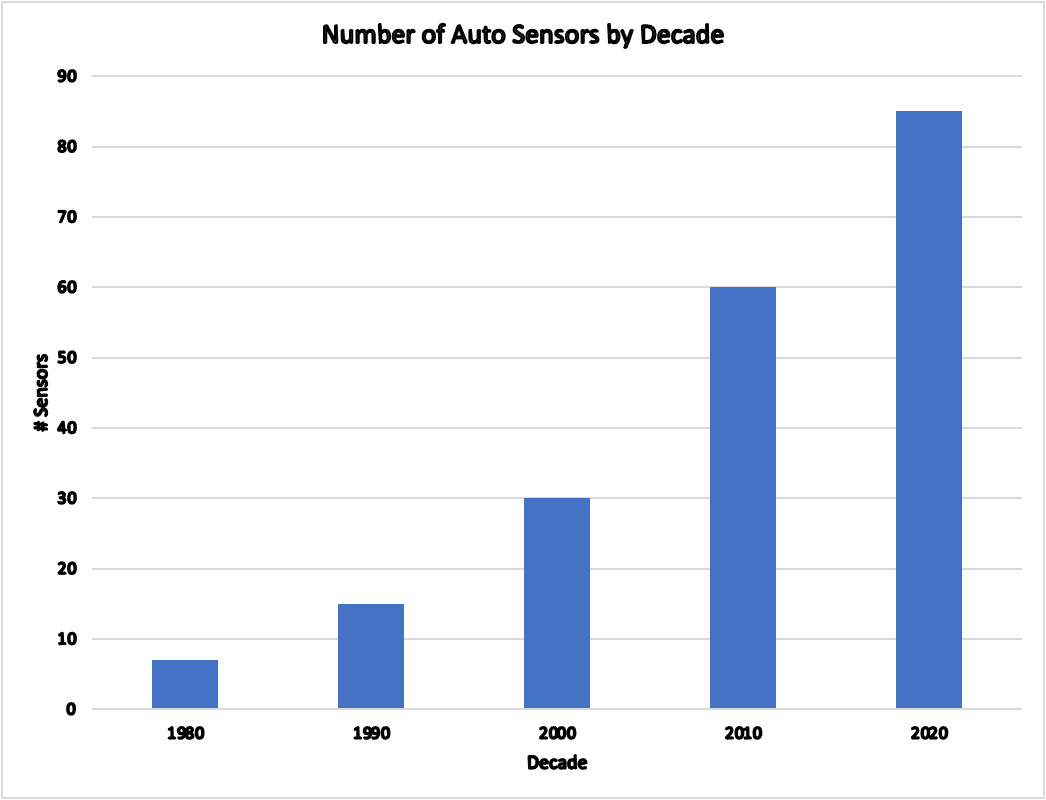
Hamann points out that while microprocessors process information thousands of times per second, the microprocessor’s 'smarts' is limited to the information it processes—and that information comes from sensors. In the 1980s cars used around 10 sensors, focusing mostly on basic engine management functions like temperature, pressure, and speed monitoring. Since then, sensor usage has roughly doubled each decade, enabling better performance, safety, and features. Today, most cars have nearly 100 sensors. And more automobile sensors are on the way...
Sensor proliferation
While other factors such as software advancements and computing power play a role in achieving higher performance and higher featured autos, the foundational enabler of improved automobile performance has been sensor proliferation, providing more and more data to microprocessors.
Hamann compares sensor proliferation in autos to what he asserts is sensor stagnation in e-bikes. Today’s core e-bike sensors measure bike speed, cadence, and motor power; on more expensive e-bikes, a torque sensor measures pedal power. (Some might argue that an e-bike brake switch is a sensor, but that’s like saying an on/off switch is a sensor). No matter how they are counted, e-bikes of 20 years ago have nearly the same array of sensors as those today. E-bike manufacturers have not followed the sensor proliferation/feature innovation path of auto manufacturers.
Five major design philosophy differences
According to Hamann, it is readily apparent that there are five major differences in design philosophy between sensors used in automobiles and those used in e-bikes:
- Auto manufacturers have strategically deployed additional sensors to improve car performance, enable new features, differentiate models and brands, and deliver more value to customers. With the exception of a torque sensor, core e-bike sensors do not significantly improve e-bike performance, add new features, or differentiate e-bike models and brands.
- Automotive sensor usage has roughly doubled every decade, yet the number of sensors used in e-bikes has remained nearly unchanged. While it’s unlikely that e-bikes can copy the high growth rate of auto sensor adoption, there is substantial opportunity to improve e-bike performance by using more sensors.
- Automobile sensor technologies have improved enormously and costs have dropped; e-bike sensor technologies are almost unchanged and costs remain high, particularly for the torque sensor.
- Sensor fusion, the combining of various sensor data in AI-like microprocessor algorithms to create new performance and feature enhancements, is common in automotive applications but is essentially non-existent in e-bikes.
- Automotive companies have controlled the design, timing, and marketing of sensor innovations. Sensor-based e-bike features such as radar, tire pressure, and GPS, have primarily come from add-on accessories made by third-parties, outside the control of the e-bike manufacturer.
New Sensors for e-bikes
Hamann believes there are four elements to applying auto sensor strategies to e-bikes: 1) adding new sensors to e-bike designs, focusing first on core e-bike attributes such as motor response; 2) replacing legacy e-bike sensors with lower cost alternatives; 3) creating algorithms that combine sensor data to deliver new, premium features; 4) customizing e-bike performance by model/brand through proprietary microprocessor algorithms.
Hamann’s company Velocomp LLC has extensive experience in deploying sensor innovations in cycling. Velocomp disrupted the power meter category 21 years ago with its innovative, patented combination of accelerometer, air pressure, and speed sensors, reducing the opening price point of bicycle power meters from $1,500+ to $299. Velocomp sensor data has also enabled a generation of subsequent cycling innovations including left/right leg balance, drafting detection, and aerodynamic drag measurement, all based on sensor-driven firmware enhancements, without additional BOM cost.
PowerBoost system
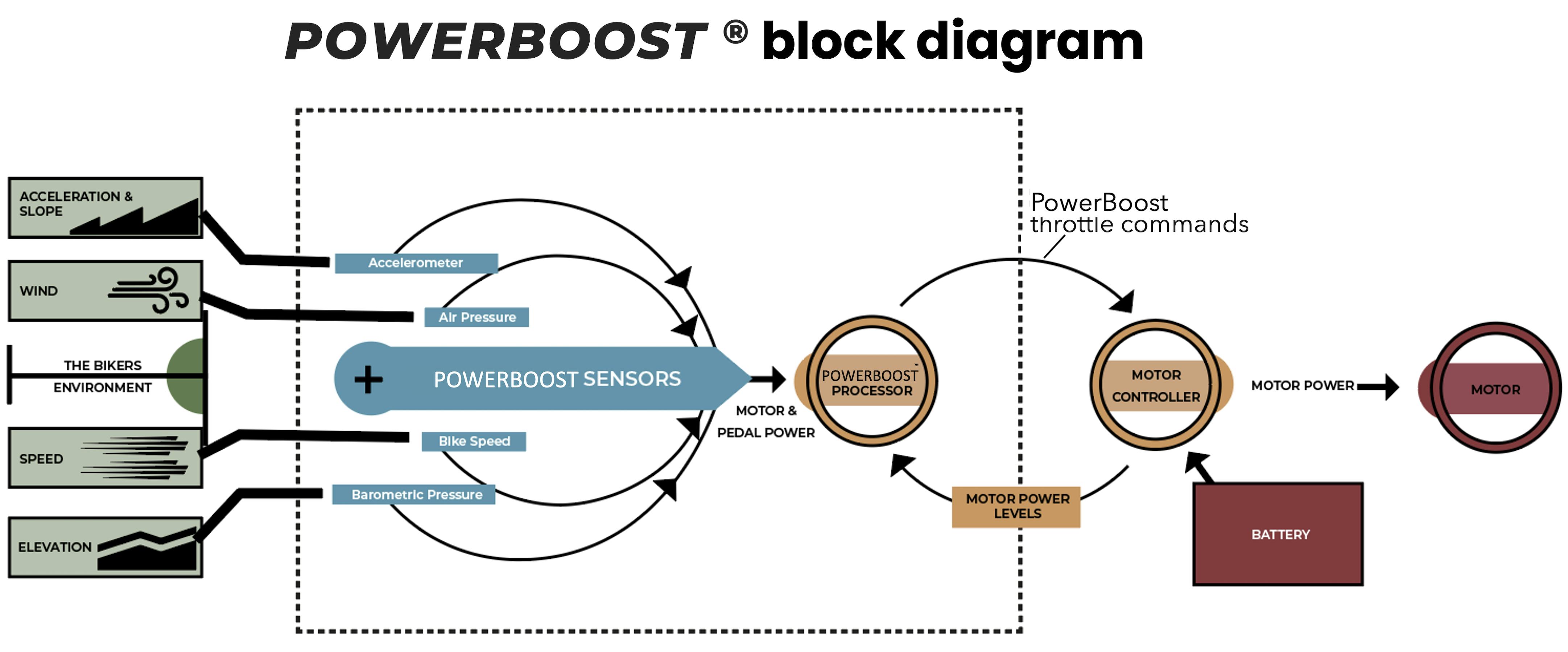
Velocomp’s sensor innovations have now been implemented for e-bikes in a newly patented system called PowerBoost. Accelerometer and air pressure sensors provide accurate, real-time environmental data including wind speed, hill slope, and bike acceleration. PowerBoost algorithms combine them to measure the total power opposing the forward motion of the e-bike. Measured motor power, subtracted from the total opposing power, yields pedal power—the same pedal power measured by expensive torque sensors. PowerBoost achieves torque sensor performance without using a torque sensor.
Benefits
Torque sensor performance is not the only advantage achieved by PowerBoost sensors and algorithms. Other benefits are:
- PowerBoost’s reliable, solid-state sensors are produced in very high volumes for smartphone and industrial applications, making it possible to deliver torque sensor performance at a cost savings of $20-$40 per unit.
- PowerBoost requires no factory-floor installation and calibration, eliminating the time and cost associated with installing and calibrating torque sensors.
- PowerBoost’s handlebar location allows the same HMI to be used for any e-bike design.
- PowerBoost adjusts motor output dynamically, 20 times per second, to changes in slope, wind speed, and bike acceleration conditions, making e-bike pedaling just like 'normal' pedaling, but easier.
- PowerBoost adjusts the starting torque of the motor according to slope; steeper slopes cause higher starting motor torque, making start-up from rest easier for the cyclist.
- For cargo bikes, PowerBoost can automatically 'weigh' the load being carried, adjusting the response of the cargo bike motor output automatically, as well as displaying the weight of the cargo on the HMI.
- PowerBoost can automatically put the motor into recuperation mode, allowing for efficient battery usage/recharging.
- Since PowerBoost sensors continuously measure environmental data, real-time slope and wind speed can be displayed on the HMI—giving cyclists a better understanding of the current ride conditions they are facing.
- E-bike performance and behavior can be further customized by model and/or by brand through proprietary firmware changes resident in the HMI, not the controller.
- PowerBoost sensors are located in the handlebar HMI, away from the deluge of ground water and rain splashing on torque sensor water seals, and eliminating expensive warranty repairs when torque sensor seals fail.
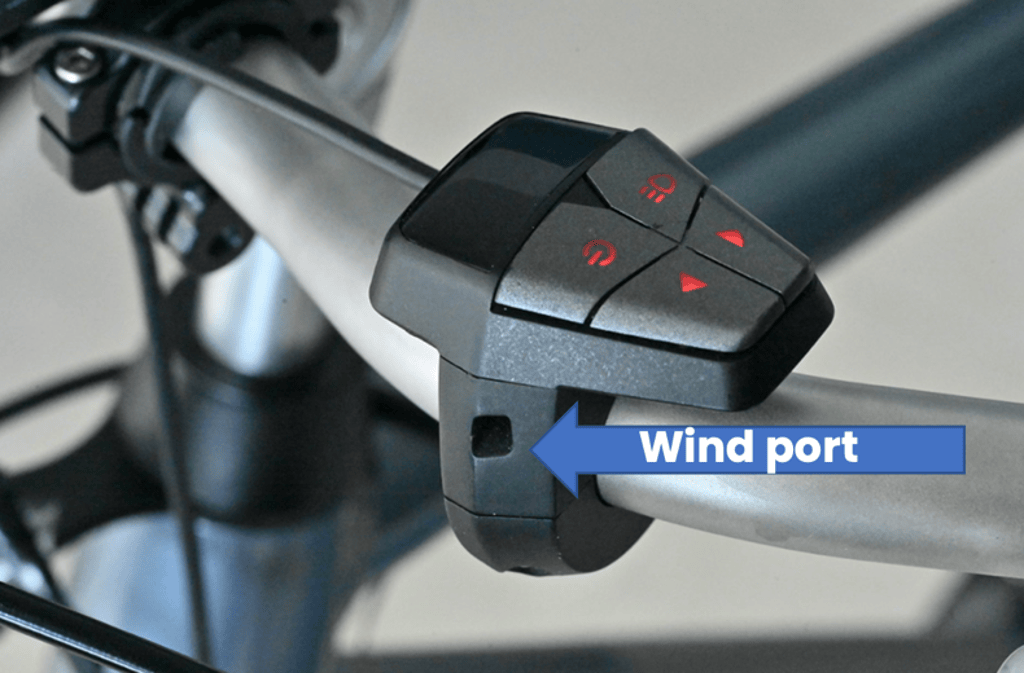
PowerBoost is ready-for-market
AVS Mobility, long-time partner of Velocomp, has implemented PowerBoost sensors and technology in its ‘RC’ line of HMI displays. Starting at around $40, AVS handlebar-mounted HMIs provide conventional e-bike control and all PowerBoost functionality. Integrated Bluetooth also allows setup and control from any smartphone, over-the-air firmware updates, and real-time display of environmental data including slope and wind speed. E-bike manufacturers can further customize the performance of any RC HMI through simple firmware modifications.
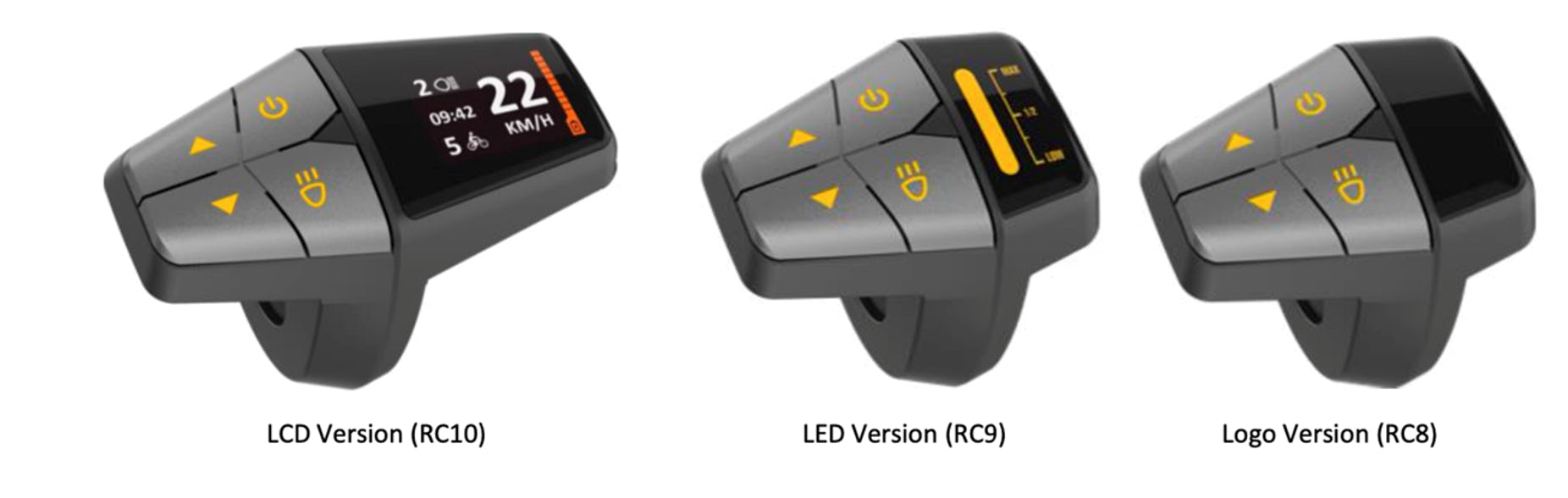
For more information about PowerBoost and AVS HMI displays, contact John Hamann, jhamann@velocomp.com, or Andreas Hoffmann, andreas@avs-electronics.com.
This article is sponsored by Velocomp.